Heinrich Lossow’s “Vor dem Spiegel” (Before the Mirror) captures an intimate moment of feminine vanity and self-contemplation. The painting depicts a woman at her toilette, examining herself in a mirror—a classic subject in art history that Lossow renders with characteristic attention to period detail and psychological nuance. The Mirror as Artistic Device The mirror has …
Heinrich Lossow’s “Neckerei” (meaning “Teasing” or “Playful Banter” in German) exemplifies the artist’s mastery of capturing Rococo-era social dynamics and flirtation. The painting depicts an intimate domestic scene where a gentleman playfully engages with a young woman, embodying the sophisticated game of courtship that characterized 18th-century aristocratic society. The Art of Rococo Flirtation The term …
Introduction Heinrich Lossow’s “Die überraschte Schäferin” (The Surprised Shepherdess) depicts the moment when pastoral fantasy confronts unwanted reality—the shepherdess playing at Rococo innocence suddenly aware she’s being watched. The “surprise” isn’t delightful encounter but uncomfortable discovery that her private moment has observer, that what she thought was solitude was actually surveillance, that the pastoral refuge …
Introduction Heinrich Lossow’s “Portrait of Young Lady 1876” captures a specific historical moment—1876, midpoint of the 1870s, when Victorian culture’s contradictions about femininity, beauty, youth, and women’s possibilities reached particular intensity. The young lady portrayed exists in liminal space between girlhood and womanhood, possibility and limitation, individual identity and social role. The portrait freezes her …
Introduction Heinrich Lossow’s “The Love Letter” captures intimacy’s paradox—the most private feelings expressed through physical object that can be intercepted, read, discovered, used as evidence. The love letter was central Victorian romantic ritual, technology of desire before telephones made instant voice connection possible. Letters allowed lovers to communicate across distance, express feelings too bold for …
Introduction Heinrich Lossow’s “An Interrupted Game of Chess” captures the moment when calculated strategy gives way to spontaneous emotion, when the game of intellect pauses for the game of hearts. The interrupted chess game was popular subject in 19th-century genre painting, symbolizing the tension between reason and passion, intellectual pursuit and romantic desire, the masculine …
Introduction Heinrich Lossow’s “The Proposition” captures that charged moment when desire becomes verbal, when one person proposes—romantically, sexually, or both—and the other must respond. The proposition is fundamentally about power—who has it, who exercises it, who resists or submits. It’s the instant when unspoken tension resolves into explicit offer, transforming social interaction into negotiation with …
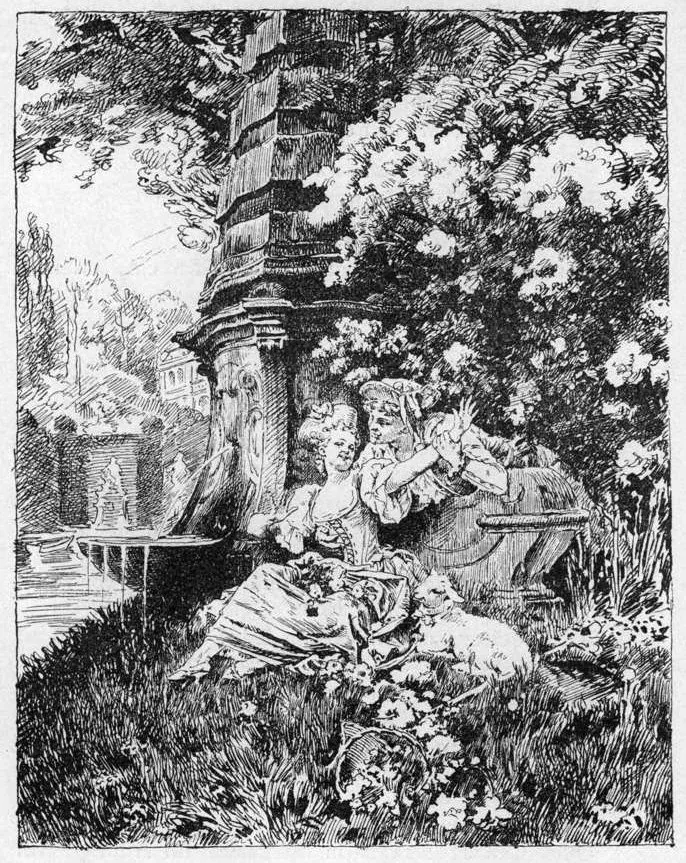
Introduction The black-and-white engraving from Glaspalast München 1883 showing “Die überraschte Schäferin” (The Surprised Shepherdess) represents Heinrich Lossow working not as painter but as illustrator—creating images for reproduction in exhibition catalogs that documented Munich’s most important annual art showcase. This shifts our understanding of Lossow’s practice from individual oil paintings to broader engagement with art’s …
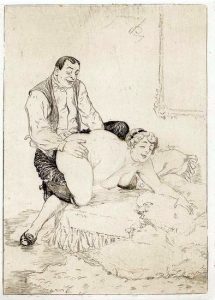
Quick Facts: Faithful Servant Series Artist: Heinrich Lossow (as “Gaston Ferran”) Work: “Ein treuer Diener seiner Frau” (A Faithful Servant to His Lady) Medium: Portfolio of 8 erotic etchings Date: circa 1890 Subject: Master-servant relationships and domestic intimacy Introduction Heinrich Lossow’s “Faithful Servant” series, created around 1890 under the pseudonym “Gaston Ferran,” reveals the artist’s …
Introduction Heinrich Lossow’s “Nymphe Und Putto Am Waldteick” (Nymph and Putto at the Forest Pond) presents itself with curious discrepancy between title and image. The title promises two figures—nymph and putto—but the painting shows only one: a solitary nude female figure standing by woodland water, viewed from behind as she glances back over her shoulder. …
Paintings
Find more articles and illustrations in the collection.